The Parent's Guide to Medical & Dental School Admissions
Everything you need to know about the UCAT, the application process, and how to support them on their journey to medical school.
Contents
1. The Admissions Journey at a Glance
2. Understanding the UCAT
3. How UCAT Scoring Works
4. Tackling Each UCAT Section
5. How UCAT Preparation Works
6. Grades & Work Experience
7. The Personal Statement
8. Applying Strategically
9. Preparing for Interviews
10. How to Support Them Throughout
11. Frequently Asked Questions
12. Costs & Financial Support
1. The Admissions Journey at a Glance
Getting into medical or dental school in the UK is a multi-step process that typically spans Year 12 and the first term of Year 13. Understanding the big picture early on means you and your child can plan ahead and avoid last-minute pressure.
| When | Milestone |
|---|---|
| Year 12 | Research & explore courses, attend open days, begin work experience, learn about the UCAT |
| May | UCAT registration opens (12 May for 2026) - register promptly to secure a preferred test date |
| Jul–Sep | UCAT testing window (13 July to 24 September 2026) at Pearson VUE centres or online; results arrive the same day |
| Summer | Draft the personal statement and finalise the UCAS application |
| 15 Oct | UCAS deadline - schools often set earlier internal deadlines |
| Nov–Mar | Interview invitations sent to shortlisted candidates; most decisions released by late March |
| Summer Y13 | A-level results arrive and students confirm their university place |
> Tip for parents: Put these key dates into a shared calendar early. Knowing the milestones in advance makes planning revision, work experience, and downtime much easier.
2. Understanding the UCAT
The University Clinical Aptitude Test (UCAT) is a computer-based exam used by the majority of UK medical and dental schools. Unlike A-levels, it tests cognitive abilities and professional judgement rather than subject knowledge.
What changed from 2025 onwards
Abstract Reasoning was removed from 2025. The exam now has four subtests with a maximum cognitive score of 2,700 (three sections each scored 300–900). Situational Judgement is reported in bands, with Band 1 being the strongest.
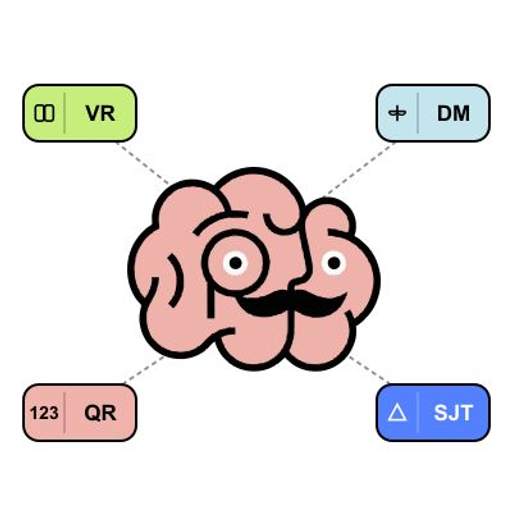
The four sections
Verbal Reasoning - 44 questions · 22 minutes
Critically evaluate written passages under extreme time pressure.
Decision Making - 36 questions · 37 minutes
Logical reasoning, probability, argument evaluation, and syllogisms.
Quantitative Reasoning - 36 questions · 26 minutes
Numerical problems from tables, charts, and graphs. GCSE-level maths, but speed is the real challenge.
Situational Judgement - 69 questions · 26 minutes
Healthcare scenarios testing professional values and ethical reasoning. Reported as Bands 1–4.
> Key fact: The exam lasts approximately two hours. There is no negative marking, so students should always attempt every question - even when guessing.
3. How UCAT Scoring Works
Understanding the scoring system helps put a result in context and guides strategic application decisions. The system changed significantly from 2025, so older resources referring to a maximum of 3,600 are now out of date.
The cognitive score
Each cognitive section (Verbal Reasoning, Decision Making, Quantitative Reasoning) is scored 300–900, giving a total out of 2,700. Scores are equated to adjust for difficulty differences between test dates, meaning a given score represents the same ability regardless of when the test was sat. Raw marks are not reported.
Situational Judgement bands
SJT is reported as a band from 1 to 4. Band 1 is the strongest. Most medical schools look for Band 1 or 2, and some will not consider Band 3 or 4 regardless of the cognitive score.
What counts as a good score?
There is no universal pass mark. What counts as competitive depends on the cohort and each university's requirements.
| Score Range | What It Means |
|---|---|
| Above 2,200 | Very strong - opens doors to the most competitive universities |
| 1,900–2,200 | Solid and competitive for most medical schools, especially with strong grades and personal statement |
| 1,600–1,900 | Average - viable for universities taking a holistic approach or placing less weight on the UCAT |
| Below 1,600 | Below average - strategic university choices become more important |
> Important context: These ranges are approximate and shift each year. The UCAT Consortium publishes annual statistics after each testing cycle. Students should use their actual score alongside each university's published selection criteria to make informed choices.
How universities use the score
Universities use UCAT scores differently. Some set strict cut-offs; others use weighted formulas combining the UCAT with grades and personal statement; a few use it mainly for borderline decisions. A score below the cut-off at one university might be perfectly competitive at another.
4. Tackling Each UCAT Section
Each section requires a different mindset. Understanding the broad principles helps you have more informed conversations about preparation.
Verbal Reasoning
With roughly 30 seconds per question, students cannot read each passage in full. The core technique is to read the question first, scan for keywords, and focus on verbs and nouns. Only explicitly stated information counts - if a statement seems reasonable but is not directly supported by the text, the answer is "Can't Tell." Practising on screen builds the right habits, including useful keyboard shortcuts.
> How to support: Encourage non-fiction reading (editorials, science articles) and practise distinguishing what a text actually says versus what might merely be inferred.
Decision Making
The most varied section, covering logical puzzles, Venn diagrams, probability, argument evaluation, and syllogisms. With roughly 62 seconds per question, it rewards a toolbox of techniques. Venn diagrams clarify syllogism questions; grids help organise complex puzzles. For argument questions, the goal is to identify the most objectively valid option - not the one that simply feels right.
> How to support: Logic puzzles and probability problems respond very well to repetition. Patterns emerge, and what felt impossible often becomes a genuine strength.
Quantitative Reasoning
GCSE-level maths under time pressure — roughly 43 seconds per question. Success comes from mental maths fluency, knowing fraction-to-percentage conversions, and efficient estimation. The on-screen calculator is available but is often slower than a quick mental estimate.
> How to support: Engage with everyday numbers: calculating tips, comparing prices, interpreting data in news articles.
Situational Judgement
Tests professional values — empathy, integrity, teamwork, and knowing when to escalate. Questions are aligned with the GMC's Good Medical Practice. Partial marks are available, so getting into the right half (appropriate vs. inappropriate) earns credit even when the exact degree of appropriateness is uncertain.
> How to support: Discuss healthcare news and ethical dilemmas together. Ask what they would do and, more importantly, why.
5. How UCAT Preparation Works
The UCAT tests thinking skills, not subject knowledge. Preparation is about building familiarity with question formats, time management, and accuracy under pressure.
When to start
Aim for 6–12 weeks before the test date. Consistent daily sessions of 30–60 minutes are far more effective than occasional marathon study blocks.
What effective preparation looks like
Preparation typically runs through three phases: familiarisation with question types, timed practice to build speed and accuracy, and full mock exams under realistic conditions. Reviewing mistakes is just as important as completing new questions.
Choosing a preparation platform
The official UCAT website (ucat.ac.uk) offers free material that every student should use as a baseline. Supplementary platforms provide larger question banks, detailed explanations, realistic mock exams, and performance tracking that highlights exactly where to focus.
Signs a change of approach is needed
Plateaus are common and normal. If scores stall for an extended period, it's worth analysing performance by question type to identify specific weaknesses and adjust accordingly.
> What parents can do: Encourage a regular routine, respect their study schedule, and offer reassurance when scores fluctuate - this is completely normal.
6. Grades & Work Experience
Academic requirements
Most medical and dental schools require AAA to A\AA at A-level, typically including Chemistry and/or Biology. Some universities offer contextual pathways for eligible students from widening participation backgrounds.
Work experience
Work experience demonstrates genuine commitment to the profession. Volunteering, GP shadowing, or charity work all count. What matters most is the ability to reflect meaningfully on what was observed and what was learned - quality of reflection often matters more than the number of hours logged.
7. The Personal Statement
From 2026 entry, UCAS uses a structured personal statement format with three questions. The total limit is 4,000 characters, with a minimum of 350 characters per question.
Question 1 - Why do you want to study this course?
Motivation, inspiration, subject interest, and future ambitions.
Question 2 - How have your qualifications helped you prepare?
Relevant A-level content, academic skills, and achievements.
Question 3 - What else have you done to prepare, outside of education?
Work experience, volunteering, extracurricular activities, and personal development.
8. Applying Strategically
Students can apply to up to five UCAS courses, with a maximum of four in medicine or dentistry. Because UCAT results are received before the 15 October deadline, students can make genuinely informed choices about which universities to apply to based on their actual score.
Each university weights the UCAT differently - some prioritise it heavily, others take a more holistic approach. Researching each university's published selection criteria is essential for building a balanced list of choices.
9. Preparing for Interviews
Interview invitations are typically sent between November and March. There are two main formats:
- Panel interviews - a traditional format with a panel of academics and/or clinicians
- MMI (Multiple Mini Interviews) - a circuit of short stations, each testing a different competency
Parents can play a valuable role by running mock interview sessions, discussing current healthcare news, and helping their child think through ethical scenarios.
> On interview day: Box breathing (inhale for 4, hold for 4, exhale for 4, hold for 4) is a reliable technique for managing pre-interview nerves. Your calm reassurance on the day will matter more than any last-minute revision.
10. How to Support Them Throughout
Be a steady presence
Maintain a consistent message: you believe in them, you are proud of their effort, and no single exam or outcome defines their worth or their future.
Protect their study environment
Timed practice requires quiet, uninterrupted conditions that mirror the real test as closely as possible.
Help them balance commitments
Work together to build a realistic timetable that includes proper rest and activities they enjoy - burnout is a real risk over a long application cycle.
Watch for warning signs
Sustained low mood, withdrawal from friends and family, or persistent sleep disruption may indicate that professional support is needed. Don't hesitate to act if you're concerned.
Manage your own expectations
Celebrate effort and progress, not just outcomes. The application process is genuinely demanding, and the journey itself builds real resilience.
11. Frequently Asked Questions
How much does the UCAT cost?
The standard fee is £70 for UK test centres. Bursaries are available for eligible students - check ucat.ac.uk for details.
What counts as a good UCAT score?
This varies by university and shifts each year. See for detailed guidance on score ranges and context.
Can my child sit the UCAT more than once?
Only once per admissions cycle. If reapplying the following year, they can sit the test again.
Does my child need a private tutor?
Not necessarily. Well-designed preparation platforms provide structured, step-by-step guidance at a fraction of the cost of private tutoring.
What if my child doesn't get an offer?
Gap-year reapplication, graduate-entry medicine, and studying abroad are all well-established and successful routes into the profession.
I've never been to university. Will that disadvantage my child?
Not at all. Many universities actively support first-generation applicants through widening participation programmes and contextual admissions policies.
12. Costs & Financial Support
| Item | Cost |
|---|---|
| UCAT exam fee | £70 (bursaries available) |
| UCAS application fee | £28.50 |
| Tuition fees (per year) | £9,535 |
| Tuition fees (5-year degree) | ~£47,675 |
| Maintenance loan - max outside London | Up to ~£10,227/year |
| Maintenance loan - max in London | Up to ~£13,762/year |
Government student finance covers tuition fees in full and provides maintenance loans to help with living costs. Repayments only begin once earnings exceed £24,990 per year, and any remaining balance is written off after 40 years.
For more information on student finance, visit .